First Three and Then the Door: Manchester's Gig Photographers on Working the Pit
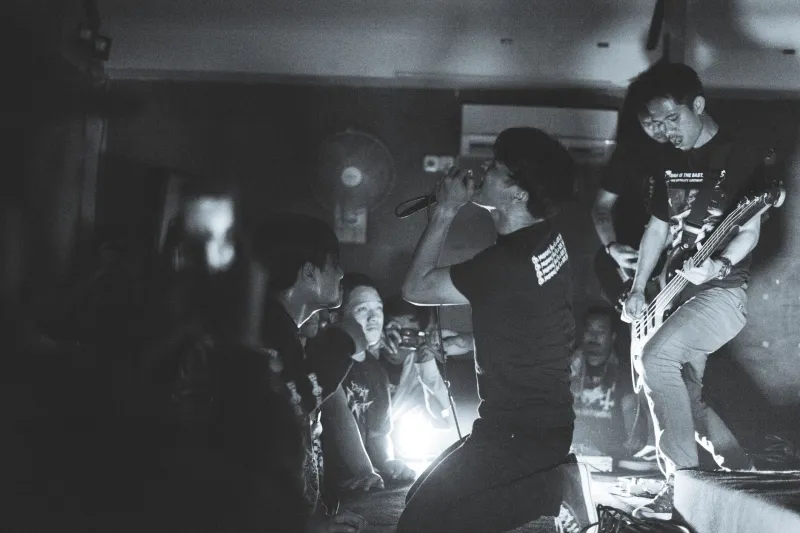
The house lights go down, the crowd surges, and the clock starts. In Manchester, the first-three-songs rule is less a law than a working compromise. You get three songs in the pit, maybe less, and then you are out. For photographers who shoot gigs across the city, from Night & Day to the Albert Hall, the rule shapes everything: how you move, what you pack, how you edit and how you behave when the lights come back up.
Three songs, give or take
The convention is simple enough. Photographers are allowed in front of the stage, or in the designated pit, for the first three songs of a set. It gives the artist space to settle in, gives the crowd an unobstructed view for the rest of the night and gives the photographer a finite window to come back with something alive. In practice, it varies. Some artists allow one song. Some allow the whole set. Some say no pit at all and ask for photographs from the side or the back of the room.
'Three songs is enough if you know what you are doing,' says a Manchester-based music photographer who shoots regularly for promoters and independent venues. 'The first song is often the worst lit. The second is when the band loosens up. The third is when the crowd starts giving you something. But you have to be ready before the first note, not faffing with your bag.'
Venue restrictions add another layer. The Albert Hall has its own rhythms and sightlines. Band on the Wall is intimate enough that a photographer can become part of the show if they are not careful. YES and The Deaf Institute have small stages and low ceilings. The Warehouse Project is a different beast entirely: huge rooms, moving crowds, lighting that changes by the bar. Photographers learn the room as much as the artist.
Getting in: accreditation is a relationship
Before the first song, there is the email. Accreditation is rarely glamorous. It is a chain of trust between photographer, promoter, venue and artist. Apply early. Confirm the details. Turn up when you say you will. Do not assume that a previous yes guarantees the next one. A polite email and a history of delivering on deadline goes further than a long list of followers.
Once inside, the work is about not being a nuisance. Do not block the front row for the whole night. Do not stand on shoulders. Do not use flash unless you have been told it is fine, and even then, think about the artist and the audience. If someone asks you to move, move. If the artist signals that they do not want cameras in their face, respect it. The best gig photographers are almost invisible until you look at the pictures.
'You are a guest in someone's room,' says one photographer who has shot in Manchester venues for more than a decade. 'The band is at work. The fans have paid. You are there to document it, not to become part of it. If you forget that, you get one song next time, or none.'
The edit after the lights go down
The ethics of gig photography do not stop when you leave the pit. Editing is where a lot of trust is won or lost. Low light means noise, motion blur and strange colours. Some correction is normal. But there is a difference between cleaning up a file and inventing a performance that did not happen. Heavy noise reduction can turn skin plastic. Aggressive cropping can remove the crowd that made the moment. Fake grain is still fake.
'If it did not look like that, do not make it look like that,' says a photographer who works with Manchester promoters on press shots and live reviews. 'I will push exposure, pull back highlights, deal with colour temperature. I will not remove a person from the front row because they are in the way. I will not make a singer look like they are screaming when they were whispering.'
Delivery matters too. Promoters often need images quickly. Artists may want to approve selects before they go public. Do not post unreleased material. Send a clear folder with captions, credits and contact details. If you have agreed to supply images for a review, hit the deadline. If you are posting on social media, tag the venue, the promoter and the artist. It is not just good manners. It is how you get asked back.
What makes a gig image feel alive
A great live photograph is not always the sharpest one. It is the one that carries the room: the sweat, the reach, the bad lighting, the person in the crowd with their eyes closed. Manchester audiences are good at giving photographers that. They sing, they move, they hold each other up. The trick is to be ready without being in the way.
Shoot wide and tight. Expose for the highlights. Embrace a bit of motion. Look for the moments between the poses. Check your settings before the first song, not during it. Carry spare batteries. Wear earplugs. Learn the venue's rules and the artist's preferences. And when the third song ends, leave the pit cleanly. The show is not over. You just have to watch it like everyone else.
The first-three-songs rule can feel like a limitation. Most of the time, it is a trust exercise. You get three songs. Use them well, and you will get the door again.