Pass the Book: Manchester’s Photobook Clubs and the Art of Looking Together
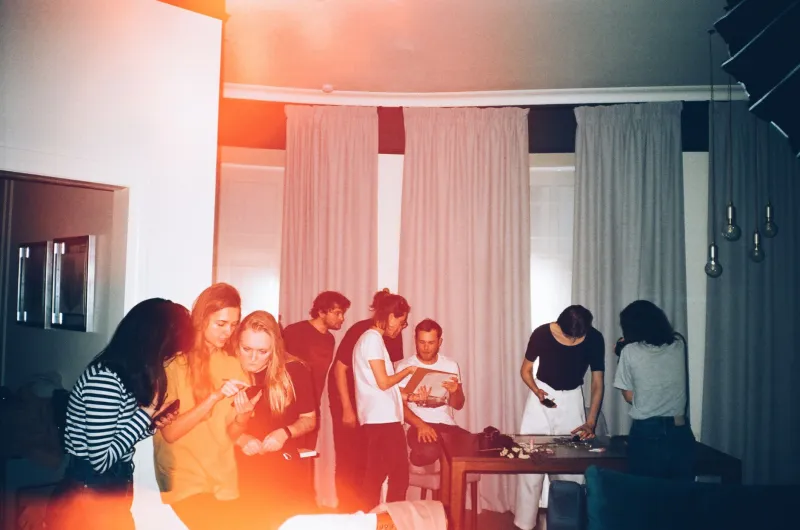
There’s a particular sound a photobook makes when someone who knows what they’re doing opens it. The spine gives a soft crack, the pages settle, and the whole table leans in. On a wet Tuesday in Ancoats, ten people are gathered round a couple of pushed-together tables for exactly that sound. No projector. No slideshow. No one is asking you to scan a QR code.
This is a photobook club, and if you haven’t been to one, the format is almost aggressively simple: bring a book, pass it round, talk about it. What sounds like a quiet night in is, in practice, one of the more animated corners of Manchester’s creative scene right now.
Why print, and why now
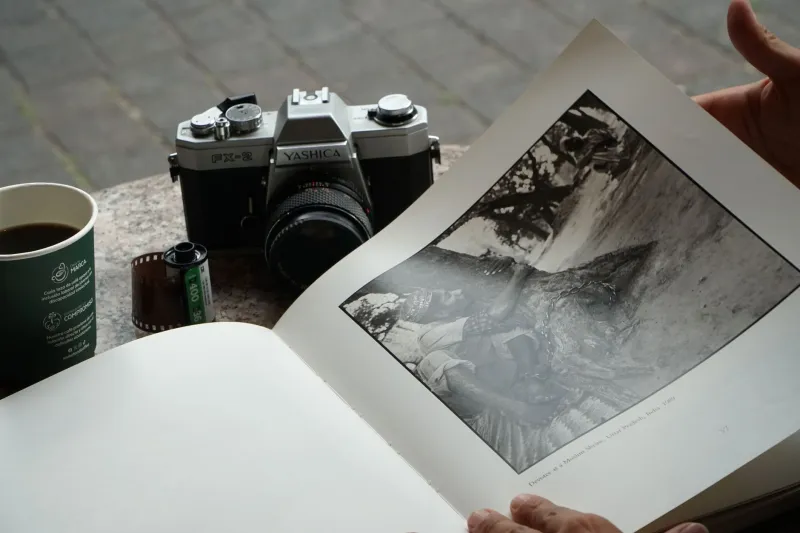
Anyone who has tried to look at a photography project on a phone knows the problem. You scroll, you half-register an image, you’re onto the next thing before the first has landed. A book asks for something different — a pace, a sequence, a physical commitment. You can’t skim a sequence that’s been edited to be turned.
That’s part of the appeal, but it isn’t the whole story. The people I spoke to kept coming back to the same idea: a photobook is a piece of design as much as a body of work. Paper stock, binding, the weight of the thing in your hands, the way a spread lands when you turn the page — all of it is part of the author’s argument. You can’t really assess any of that on a screen, and you certainly can’t pass it to the person next to you.
There’s a practical pull, too. Photobooks have become expensive enough that buying blind is a gamble. A club is a way of handling a £45 hardback before deciding whether it earns shelf space. For photographers, it’s a free education in editing and sequencing — how someone else solved the problem of putting forty pictures in an order that means something.
How a night actually runs
The formats vary more than you’d expect. The one in Ancoats is a loose open table: everyone brings something, and whoever’s keenest goes first. Another group that meets in a Northern Quarter bookshop works to a theme each month — borders, family, the North, work — which nudges people away from their comfort zone. A third runs on a reading-room model: half an hour of quiet browsing, then an hour of discussion, then the pub.
The through-line is timekeeping. Most nights give each book five to eight minutes, which sounds tight until you’ve sat through a twenty-minute monologue about someone’s favourite photographer. Good hosts keep it moving and gently cut off the person who has decided to deliver a lecture. The best nights leave a gap for the book nobody expected anyone to bring.
The etiquette of handling
This matters more than newcomers think. Clean, dry hands. Support the spine when you open it. Never force a book flat in the gutter — if the binding doesn’t want to go there, don’t make it. Ask before photographing a spread, and don’t be the person who creases a corner to mark their place.
Where clubs lend books between meetings, there’s usually a sign-out sheet and a two-week return. It’s low-tech and it works, largely because the sort of person who turns up to a photobook club is also the sort of person who returns things.
Who actually turns up
Not just photographers, is the short answer. Yes, there are students from the city’s photography courses, working shooters between commissions, and zine-makers with a tote bag full of their own stock. But there are also collectors, retired people with a serious shelf at home, a couple of curators, and plenty of people who simply like looking at pictures and have nowhere else to do it in company.
Group sizes hover between eight and twenty-five. Most are free; some ask for a few quid towards room hire. The vibe is closer to a book group than a networking event, which is precisely why it works. Nobody is handing out business cards.
Where it happens
Manchester is well served for rooms. The Central Library and the Whitworth both offer the kind of space that makes a book feel like an event, and the city’s independent bookshops have been quietly hosting sessions upstairs for years. There are also clubs in Salford studios, Chorlton cafés, and the occasional back room of a pub — anywhere with decent light, a sturdy table, and enough chairs.
Accessibility is worth thinking about if you’re organising one: step-free entry, a venue that doesn’t insist you buy a drink, and a start time that isn’t 8pm on a weekday for people with caring responsibilities. The best clubs I’ve visited have thought about this without making a thing of it.
What gets argued about
Everything, thankfully. Sequencing is the perennial favourite — why this picture sits opposite that one, whether the book earns its opening spread, whether the edit would be stronger with twenty fewer images. Design gets a proper hearing: typography, captions, the decision to include text at all. Print runs and publishers come up constantly, and not just the big international names — the small presses doing interesting things with paper and format get their share of the table.
There’s also a running conversation about the photobook as portfolio. Photographers bring dummies, the rough handmade mock-ups that precede a real print run, and get them handled by strangers. For anyone who has ever tried to photograph their own dummy and post it online, watching a room physically turn the pages is a different kind of feedback altogether.
Why it’s quietly becoming essential
A photobook club won’t teach you how to use a camera. It will, however, sharpen your eye in a way that scrolling never does, and it will do it in a room with other people who care about the same thing. In a city with no shortage of photography courses, talks and exhibitions, that’s the bit that’s genuinely hard to find elsewhere: unhurried, shared attention.
The book gets passed back. Someone says they didn’t get it at all. Someone else explains what they saw. The kettle goes on. And for a couple of hours, nobody looks at a screen.
If you’re thinking of starting one, the advice from the people who run them is refreshingly unglamorous: pick a venue with good tables, keep it free or nearly free, set a monthly rhythm and stick to it, and don’t over-programme. Bring a book you’ve been meaning to read. The rest tends to sort itself out.