Red Light, Long Nights: Manchester's Shared Darkrooms Are Quietly Having a Moment
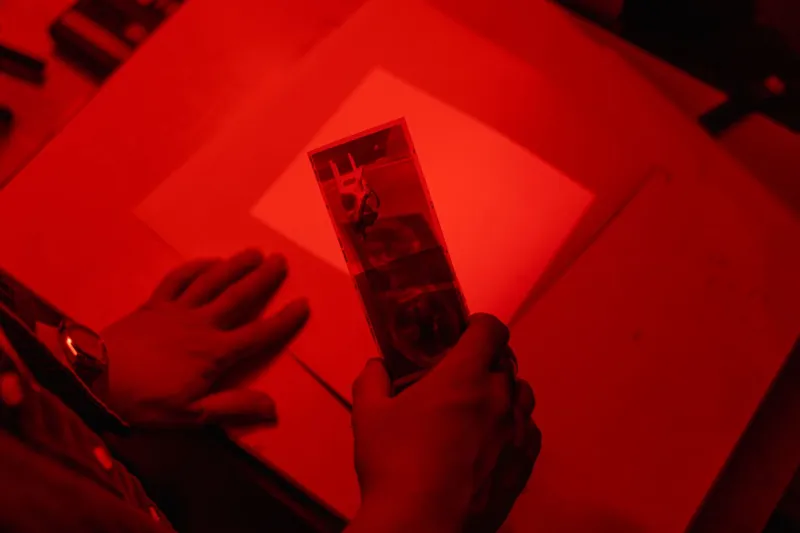
There's a particular sound a darkroom makes at half nine on a weekday evening: the gurgle of a wash tank, the clack of a developing tank being tapped on the bench, and somebody in the corner loudly explaining that they definitely didn't fog that sheet of fibre paper. It is not a nostalgic sound. It is a busy one.
Across Greater Manchester, shared darkrooms are running inductions, open-access slots and print nights that fill up faster than most gigs. Not because of a wave of sentimentality about the pre-digital past, but because a rented darkroom solves a problem that a home setup cannot: it makes printing socially and financially possible for people who don't have a spare bathroom, a ventilation duct or a hundred quid a month for chemistry.
The smell of fixer and the sound of the kettle
The spaces are unglamorous in a way that is oddly reassuring. A railway arch here, a former textile unit there, a community centre basement with better plumbing than you'd expect. Blackout curtains are always slightly improvised. There's a kettle, a noticeboard of half-torn workshop flyers, and a fridge nobody trusts.
What they share is a rota. The people running these places are rarely full-time darkroom technicians — they're members who took on a shift because somebody had to. A former retoucher who got tired of staring at layers panels. A retired press photographer with strong opinions about stop bath. A twenty-something who learned to print at university and refused to give it up when the facility closed.
The result is a strange and quite lovely mix of generations in one room. On a decent night you'll have a student printing their first-ever contact sheet next to someone who has been burning and dodging since the 1980s and can spot an underexposed frame from across the corridor. Nobody is precious about it. People help.
What a membership actually buys you
Here's where the romanticism meets the spreadsheet. Most shared darkrooms in the region run some combination of three things:
- Open-access sessions — usually a few hours, booked in advance, priced somewhere between a pint and a cinema ticket. Bring your own paper and negs, use the kit on site.
- Monthly membership — a flat fee that gets you priority booking, a locker, storage for your paper and chemistry, and a say in how the place is run.
- Inductions and courses — a one-off fee to prove you know which way round to hold a squeegee before you're let loose unsupervised.
The maths is compelling when you do it honestly. A home darkroom means an enlarger, a lens, easels, trays, safelights, a timer, a print washer, blackout, ventilation, and somewhere to legally dispose of spent fixer. Even second-hand, that's a serious commitment — and the council won't thank you for tipping it down the drain. Shared spaces spread that cost across dozens of people and keep the chemistry fresh, which is more than most home setups manage.
The honest weak spot is that membership rarely covers the full cost of the building. Rent, insurance, chemical disposal and replacing the enlarger somebody knocked over are not cheap. Most of these places survive on a mix of membership income, paid workshops, and a lot of unpaid labour. Which is worth remembering the next time you're annoyed that the Nova is broken.
The social bit is the point
The thing nobody predicts when they join is that the darkroom becomes a club. Printing is a stop-start process — six minutes of agitation, then sitting in the dark — and that dead time gets filled with conversation. People bring prints to swap. Someone starts a zine table. A critique night appears on the calendar and turns out to be far kinder than the word "critique" suggests.
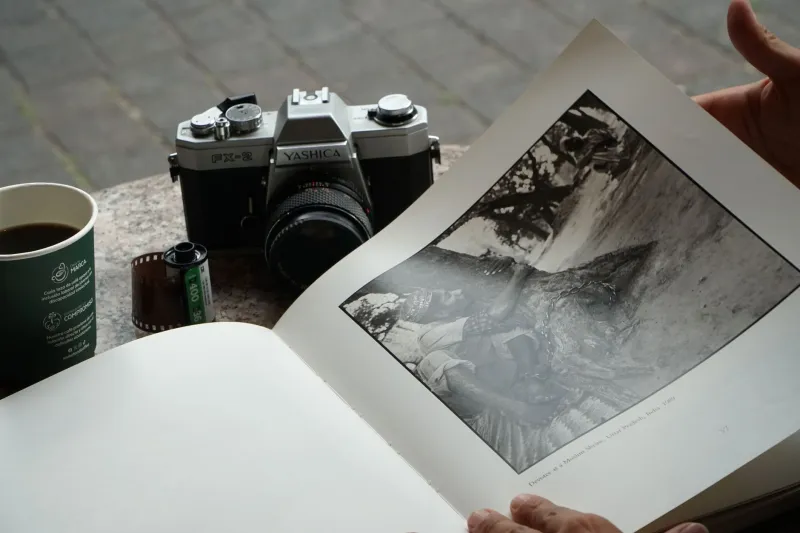
There's a practical benefit buried in all this: knowledge transfer. Scanning workflows, film stock experiments, where to get a camera repaired, which lab does decent hand processing in a hurry — all of it circulates in person rather than in a forum thread. For a new generation of camera enthusiasts who arrived via cheap SLRs and Instagram, that's the appeal. Not the aesthetic of the past, but the company of the present.
It also keeps print culture alive in a very literal way. A darkroom is where photographs stop being files and start being objects you can hand to somebody. That shift in physicality changes how people shoot. You become more careful with a frame you know you'll have to print.
Why now, in 2026
Two things have happened. First, the cost and inconvenience of outsourcing everything has pushed people towards doing it themselves — postal turnaround, scanning fees and lab closures have made DIY printing look pragmatic rather than nostalgic. Second, and more interestingly, there's a growing appetite for a hobby that doesn't glow. An hour in a darkroom is an hour with no notifications, no autoplay, no feed. Just you, a negative, and a slightly too-hot enlarger.
That's the real renaissance. Not a revival of the technology, but a revival of the room.
Getting in without annoying everyone
If you're new, book an induction rather than turning up with a bag of negatives and hopeful eyes. Bring your own paper — the communal stock always runs out. Learn the wash routine properly, because nobody wants to be the person who leaves fixer in the tray. Don't monopolise the only 35mm carrier on a busy night. And when the rota email goes round asking for volunteers to clean the trays, volunteer. It's the difference between a darkroom that lasts and one that quietly shuts in March.
The lights, meanwhile, are still off. Long may they stay that way.