Negative Space: The Manchester Volunteers Rescuing Family Photos Before They Vanish
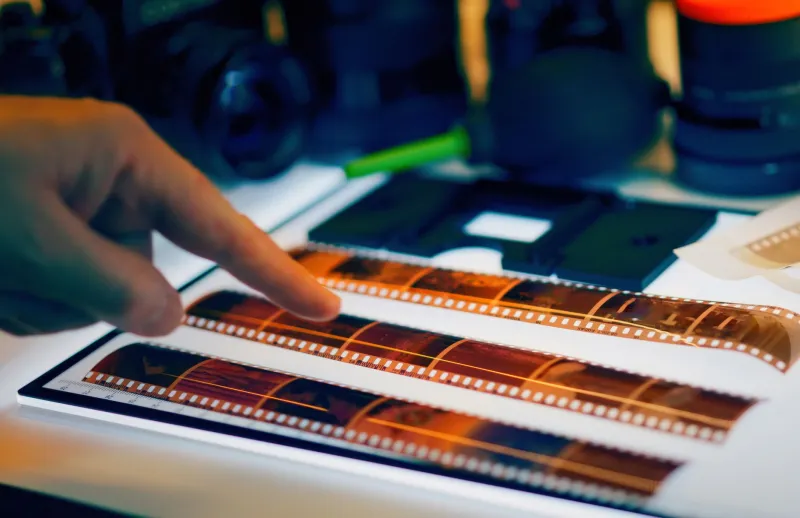
In a side room at a community centre in Levenshulme, a shoebox is being carefully unpacked. Inside are maybe forty 35mm negatives, a handful of curling colour prints and one very optimistic rubber band that has fused itself to a 1970s holiday snap. A volunteer in cotton gloves is explaining, patiently, that the rubber band has to go. The scanner is already warming up.
This is the less glamorous end of Manchester’s photo scene, and it is busier than you might think. Across the city, libraries, community centres and local history groups are running scanning sessions, drop-ins and one-to-one appointments for people who have inherited a family archive and no idea what to do with it. The work is part conservation, part counselling and part technical support. The goal is not to make everything look brand new. It is to make sure it still exists in ten years’ time.
The shoebox boom
You can call it an archive boom if you like, though it rarely feels dramatic. It looks more like a queue of people holding carrier bags. A woman from Chorlton brings her father’s slides from his time working abroad. A family from Wythenshawe arrives with a bin liner of prints that has been through two house moves and one burst pipe. Someone from Salford has a single negative of a grandparent’s shop and no idea where the building was.
Manchester Central Library and the local studies collections have long been the obvious ports of call for serious research, but the growth is happening at a smaller scale too: church halls, housing association offices, community hubs and library noticeboards advertising scan days. The appeal is simple. Most people do not need a professional archive service. They need someone to show them how to handle a negative without scratching it, how to scan a print properly, and how to name the files so future relatives can actually find them.
The volunteers are not all trained conservators. Some are photographers, some are retired IT workers, some are family historians who got stuck in after rescuing their own collections. What they share is a healthy respect for the original object. The print is the artefact. The scan is the access copy. Confusing the two is where trouble starts.
What goes wrong in the loft
Most damage is boringly predictable. Heat, damp, sunlight, PVC sleeves, self-adhesive albums, rubber bands and sticky tape are the usual suspects. Colour prints fade. Negatives scratch. Slides grow mould. Prints stick together in the attic and then separate with a sound you never want to hear again.
Practical advice from the scanning sessions tends to be reassuringly low-tech. Handle prints by the edges. Keep negatives in acid-free sleeves, not the wallet from the chemist. Avoid PVC. Do not use household cleaners on emulsion. Do not laminate anything you care about. Keep originals out of direct sunlight and away from radiators, boilers and damp outside walls. If you are scanning at home, a flatbed scanner is fine for prints; aim for around 600dpi for a decent print scan, and higher for small details or negatives. A 35mm negative scanned at 2400 to 3200ppi gives you room to work with later. Save a master file as a TIFF, keep an untouched copy, and make your edits on a duplicate. Back it up in more than one place. The old 3-2-1 rule still applies: three copies, two types of media, one off-site.
The most important rule is less technical: do not throw away the originals after scanning. A digital file is useful, but it is not the same object. The crease in the corner, the handwriting on the back, the badly cropped print from a seaside booth — that is evidence as much as image.
The retouching question
Then comes the awkward part. Once a scan exists, someone will ask whether the scratch can be removed. Usually it can. Dust, hairs, scanner streaks and emulsion damage are fair game. But family photos are not just pictures; they are claims about people, places and events. Retouching gets philosophical fast.
A good working rule is to keep the master unedited and make any restoration a separate, clearly labelled derivative. Removing a scanner artefact is housekeeping. Reconstructing a missing face, changing a colour, slimming a waistline or erasing an estranged relative is something else. Colourisation can be lovely, but it is an interpretation, not a fact. AI fill tools can produce a convincing collar or background that never existed. In a family archive, that matters.
Volunteers tend to ask the same questions: Who is this for? What are you trying to preserve? Would you be happy if the person in the photo could see the edit? And does the rest of the family agree? A restored print can be a gift. It can also reopen old arguments. The ethics are not about being precious. They are about keeping the difference between repair and reinvention visible.
Where to start in 2026
If you have a collection quietly mouldering in a cupboard, start small. Pick one box, one album or one bundle of negatives. Do not try to digitise three generations in a weekend. Bring a sample to a local scan session and ask for advice before buying equipment. Check library noticeboards and community centre newsletters, ask at your local camera shop, or speak to a local history group. Many sessions run on a drop-in basis, though booking is wise if you need help with negatives or slides.
And if you are the one doing the scanning, label everything. Names, places, dates, who is who, what year it was. Future relatives will thank you. The image may survive the loft. The story needs a bit more help.