No Gavel, No Scores: Manchester's Photography Groups Are Meeting in Pubs Now
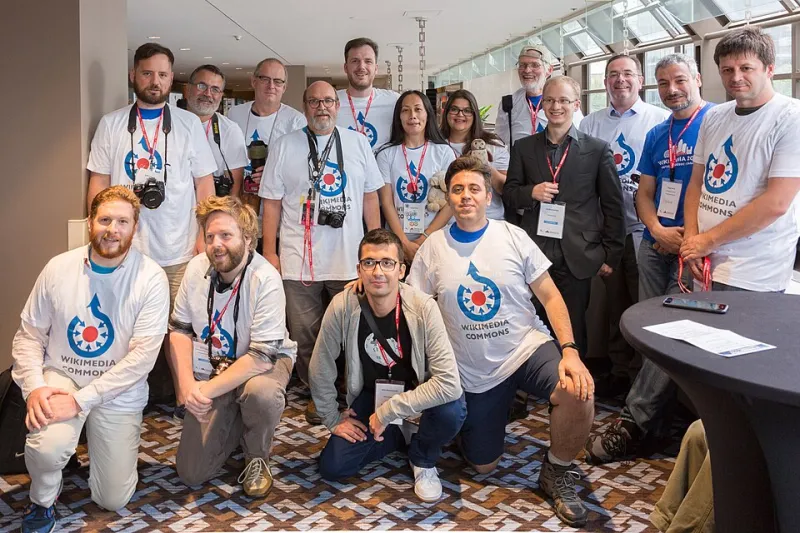
Photo: Freddy2001, CC BY-SA 3.0, via Wikimedia Commons
Ask anyone in Greater Manchester who last set foot in a camera club in the noughties and you'll get the same story back: a draughty church hall, a tea urn, and a judge with a clipboard dishing out marks out of twenty like a disappointed PE teacher. The format did a job for decades, teaching exposure triangles to generations. It also scared off a lot of people who quite fancied taking pictures.
In 2026, the interesting stuff is happening elsewhere. Pub back rooms, café corners, shared studios and group chats that organise a walk with 48 hours' notice. The new outfits share a handful of traits — free or nearly free, no league tables, and a stubborn preference for looking at photographs together rather than ranking them against each other. Here are three, all different, all worth a look.
The gavel has left the building
Let's be fair to the old model before we bury it. Traditional clubs kept photography alive in this city for a century, and plenty still run excellent talks and workshops. The problem was never the people. It was the machinery around them: annual subs that crept towards £60, a calendar built around inter-club competitions, and a judging culture where a picture either ticked the boxes or it didn't. Experimental work tended to lose. So did anything shot on a phone.
What's replaced it isn't one thing. It's a looser, scruffier ecosystem — which is exactly why it's working.
Coffee first, critique second: Salford's no-subs social
On the first Tuesday of every month, a café just off Chapel Street in Salford fills up with about thirty people and a lot of camera bags. There's no membership card, no register, no fee. You buy a brew and you're in.
Chapel Street Snappers started in 2023 as four friends who'd all quietly quit their respective clubs. Now it's one of the busiest meetups on this side of the river. The format is deliberately low-effort: fifteen minutes of announcements, then people pair off to look at whatever's on their phone or in a folder of prints, then a loose theme for next month — blue, the walk to work, something you'd never put on Instagram.
"We had one rule from day one," says one of the organisers, a documentary photographer who asked us not to make a fuss about her day job. "Nobody gives a mark out of ten. You can say what a picture does to you, you can ask what they were going for, but you don't grade it. It changes the whole temperature of the room."
What's striking is who turns up. Retired blokes with battered Leicas next to students shooting on nothing but a phone, next to a woman who's been making a project about her mum's street for three years. Nobody's asked to justify their kit.
After dark in Ancoats
Mill Light Collective takes a different approach: less sitting, more walking. Once a month, on a Thursday, a group of up to twenty meets at a bar off Bengal Street in Ancoats, then heads out for two hours along the canal and the edges of the Northern Quarter before coming back for a pint and a phone-edit session.
The cap is deliberate. "Twenty is about the point where you stop being a group and start being a crowd," says one of the founders. "At twenty, people actually talk to each other. At forty, half of them go home without saying a word."
The group has a firm house style on ethics, too — no flash in anyone's face, ask before you photograph people, and if someone's working a door or sleeping rough, you leave them be. Newcomers get a five-minute brief before they set off. It's not a lecture; it's just how they do things.
What you get out of it is less a lesson and more a habit. People who'd never have shot at night start shooting at night. People who'd never have spoken to a stranger end up in a two-hour conversation about white balance with someone they met by a lock gate.
The crit table in Stockport
Over in Stockport, a quieter experiment is running in a shared studio up a staircase near the town centre. The Crit Table meets on the last Sunday of the month, 11am to 1pm, and charges a fiver to cover the room.
That's it. That's the offer. You bring eight to ten pictures, ideally a work in progress, and you get ten minutes of focused attention from people who are actually looking. A facilitator keeps time and keeps it kind. Nobody scores anything, and nobody is allowed to open with "I like it, but…"
"It came out of frustration," says one of the two photographers who set it up. "We'd both been in clubs where the competition judge was the only person whose opinion counted. And the judge was often someone who'd never made a body of work in their life. We wanted the opposite: lots of opinions, none of them final."
It's small — a dozen regulars, with a waiting list — and it's quietly become one of the most useful two hours in the Greater Manchester photography calendar. Several projects have come out of it, and at least two collaborations.
What it means for the scene
The obvious win is access. Free or cheap beats a subscription for a lot of people right now, and "bring your phone" beats "bring a DSLR" for a lot more. The new formats also suit shift workers, parents and anyone who can't commit to every Wednesday for a year.
The risk is the flip side of all that looseness. Clubs passed on technical knowledge almost by accident — you learned about histograms because the bloke next to you wouldn't shut up about them. Informal groups can lose that, and there's a real chance of cliques forming around whoever's most confident in the room.
Which is why the most interesting story might be the traditional clubs that are quietly changing. At least one in Prestwich has scrapped its internal league and replaced it with open print evenings. Membership is up. Nobody's saying the old model is dead. They're saying it's being rewritten, table by table, in rooms where the only thing on the clipboard is a sign-in sheet. And that has to be good for a city with this many cameras in it.